



Simple & Stunning: Easy Mehndi Designs
Introduction
Mehndi—also known as henna—has been a beloved form of artistic expression for centuries. From weddings and festive celebrations to casual self-expression, mehndi designs add charm, beauty, and cultural richness to any occasion. But if you’re a beginner, the intricate patterns you see online can feel overwhelming. How do artists create such perfect symmetry? Where do you even start?
Good news: easy mehndi designs don’t have to be complicated. With the right guidance, even a complete beginner can create beautiful, clean, and eye-catching patterns. This comprehensive guide breaks down beginner-friendly techniques, step-by-step tips, and design ideas so you can start creating your own stunning mehndi art today.
Why Start with Easy Mehndi Designs?
Before jumping into advanced patterns like full bridal motifs or complex Arabic swirls, it’s important to build a foundation.
Here’s why simple designs are perfect for beginners:
-
They help you practice control over the cone and learn pressure techniques.
-
They improve symmetry and confidence without overwhelming details.
-
They require fewer lines and strokes, allowing faster learning.
-
They still look elegant, even though they’re minimalistic.
Beginners often underestimate how quickly simple mehndi can look stunning when done with clean, confident lines.
Essential Tips Before You Begin
Choose the Right Mehndi Cone
Not all cones are equal. For beginners, a cone with:
-
Smooth, consistent flow
-
Slightly thick paste
-
A narrow nozzle tip
…will give you better control and cleaner lines.
Practice Basic Strokes First
Just like handwriting, mehndi requires muscle memory. Practice:
-
Dots
-
Straight lines
-
Curves
-
C-shaped strokes
-
S-shaped curves
-
Teardrop shapes
Fill a sheet of paper with these strokes before applying them on the skin.
Keep Your Hands Steady
A few ways to improve stability:
-
Rest your elbow on a table
-
Use your non-dominant hand to support the cone
-
Start with smaller designs to reduce hand movement
Prepare the Skin
Clean, dry skin ensures better stain quality. Avoid lotions or oils before applying mehndi.
H2: Easy Mehndi Designs for Beginners
Below are the most popular styles that beginners can master quickly.
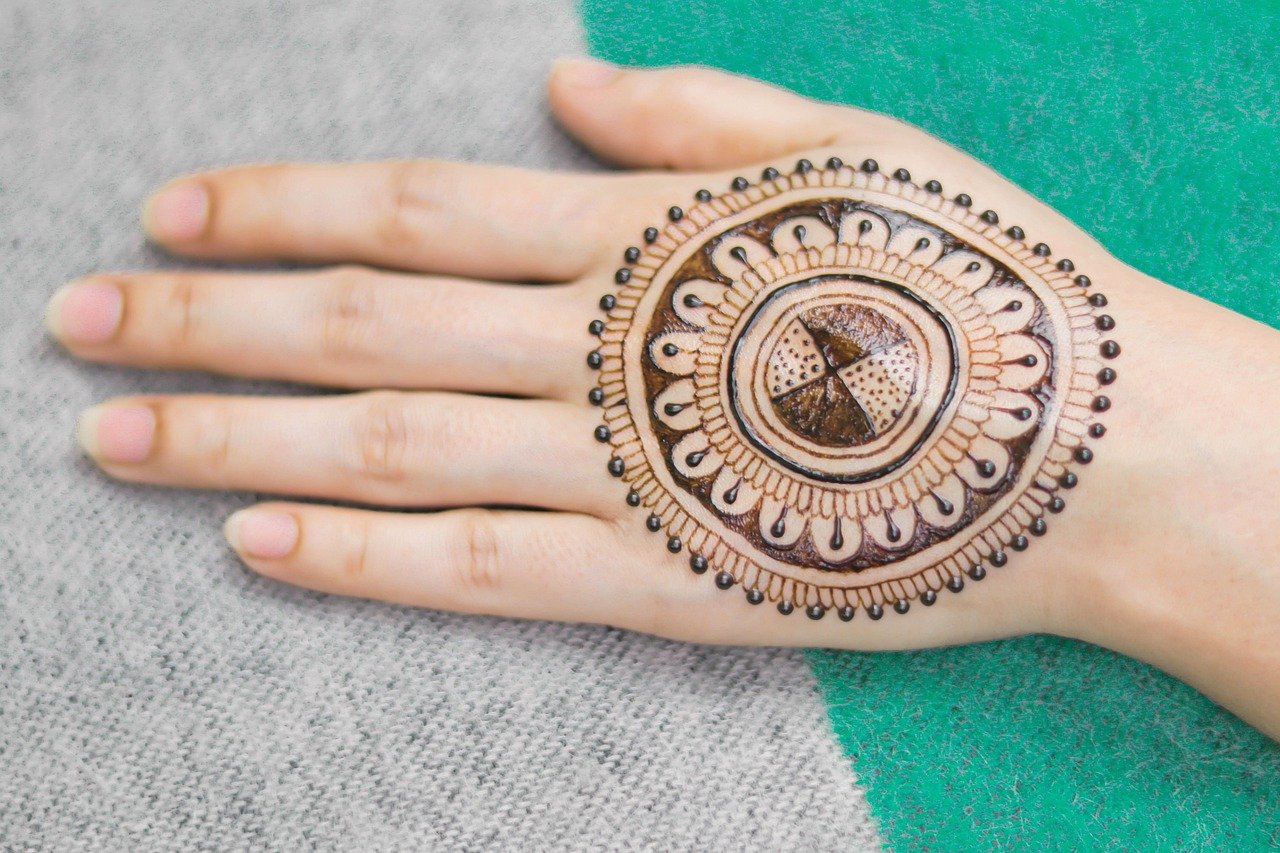
H3: 1. The Classic Mandala Pattern
Mandala designs are perfect for beginners because they’re built around a central point. Even simple circles radiate beauty.
How to Create a Beginner-Friendly Mandala:
-
Start with a small dot in the center.
-
Draw a few concentric circles around it.
-
Add petals, semicircles, or loops around each layer.
-
Keep expanding outward with simple repetitive patterns.
Why It Works:
Mandalas rely on repetition—not complexity—making them great for steadying your hand.
Real-World Example:
Many beginners start with a palm mandala because even a basic version looks symmetrical and elegant in photos.
H3: 2. The Arabic Trail Design
Arabic mehndi is known for its bold outlines and leafy trails. It’s great for beginners because it doesn’t require filling the entire hand.
Elements to Practice:
-
Leaves
-
Flowers
-
Dots
-
Swirls
-
Bold outlines
How to Make an Easy Arabic Trail:
-
Begin at the wrist or palm.
-
Draw a flower as your starting point.
-
Extend the design upward with curved lines and leaf patterns.
-
Add dots to connect the shapes and fill empty spaces.
Why It Works:
Arabic designs are forgiving. Even if your lines vary slightly, the overall pattern still looks beautiful.
H3: 3. Finger Tip Patterns
One of the easiest ways to apply mehndi without overwhelming yourself is by focusing on the fingers.
Simple Finger Design Ideas:
-
Repeated dots
-
Chevron lines
-
Minimal floral rings
-
Net patterns
-
Tiny leafy vines
Beginner Tip:
Finger designs take less time and give a polished, modern mehndi look—perfect for casual events or photoshoots.
H3: 4. Minimalist Wrist Bands
If you prefer subtle and modern mehndi, wrist band styles are ideal. These involve simple geometric or floral patterns drawn in a bracelet-like shape.
Ideas Include:
-
A chain of tiny flowers
-
Parallel lines with dots
-
Simple leaf vines
-
Small mandala as centerpiece
Why Beginners Love It:
The wrist offers a flat surface, making it easier to control your strokes.
H3: 5. The Grid or Net Pattern (Jaali Design)
Jaali designs look intricate but are surprisingly beginner-friendly.
How to Create a Simple Net Pattern:
-
Draw diagonal lines in one direction.
-
Cross them with diagonal lines in the opposite direction.
-
Add small dots or flowers where lines intersect.
Pro Tip:
Start small—such as on the back of the hand—before attempting larger grids.
H2: Step-by-Step: A Simple Mehndi Design for Beginners
Here’s a complete pattern you can try right now:
-
Start with a small flower on the center of the palm.
-
Add leaves around it, forming a circular floral pattern.
-
Create three curved trails extending from the circle.
-
On one trail, draw a simple leaf vine.
-
On the second, make tiny flowers connected by dots.
-
On the third, add a small mandala at the end.
-
Decorate each finger with minimal lines and dots.
This design takes 10–15 minutes and looks neat, elegant, and perfectly beginner-friendly.
How to Make Your Mehndi Color Darker
A dark stain always makes mehndi designs look richer.
Here’s how to enhance the color:
-
Keep the mehndi on for at least 6–8 hours.
-
Apply a mixture of lemon juice and sugar on the drying paste.
-
Warm your hands over steam after removing the paste.
-
Avoid water for the first 12 hours.
These simple steps can enhance your stain from light orange to deep maroon.
Common Mistakes Beginners Should Avoid
-
Applying too much pressure—leads to thick, uneven lines.
-
Rushing symmetry—always rotate the hand instead of bending uncomfortably.
-
Leaving designs unfinished—use dots or swirls to fill awkward gaps.
-
Using very complex references—start small and simple.
Remember: neatness matters more than complexity.
H2: Practice Routine to Improve Mehndi Skills
Consistency is the key. Here’s a simple routine:
Daily (10 minutes):
-
Practice lines, curves, and dots on paper.
Weekly (30 minutes):
-
Try one small design on your palm or wrist.
Monthly:
-
Attempt a full-hand design to track your progress.
Many artists start with basic shapes—just like you—and improve through continuous, patient practice.
Conclusion
Learning easy mehndi designs is the perfect starting point for anyone interested in henna art. With simple strokes, beginner-friendly patterns, and some practice, you can create beautiful designs that stand out at any event. Remember, mehndi is not just about the final look—it’s a relaxing, creative process that celebrates tradition and self-expression.
Start with the basics, stay patient, and gradually challenge yourself with more complex motifs. Before you know it, you’ll be creating stunning mehndi designs with confidence and creativity.
If you’d like, I can also create a downloadable practice sheet, step-by-step illustrations, or a custom beginner design—just let me know!
